Funding · Grants · PPA
Funding, grants & PPA for care home solar
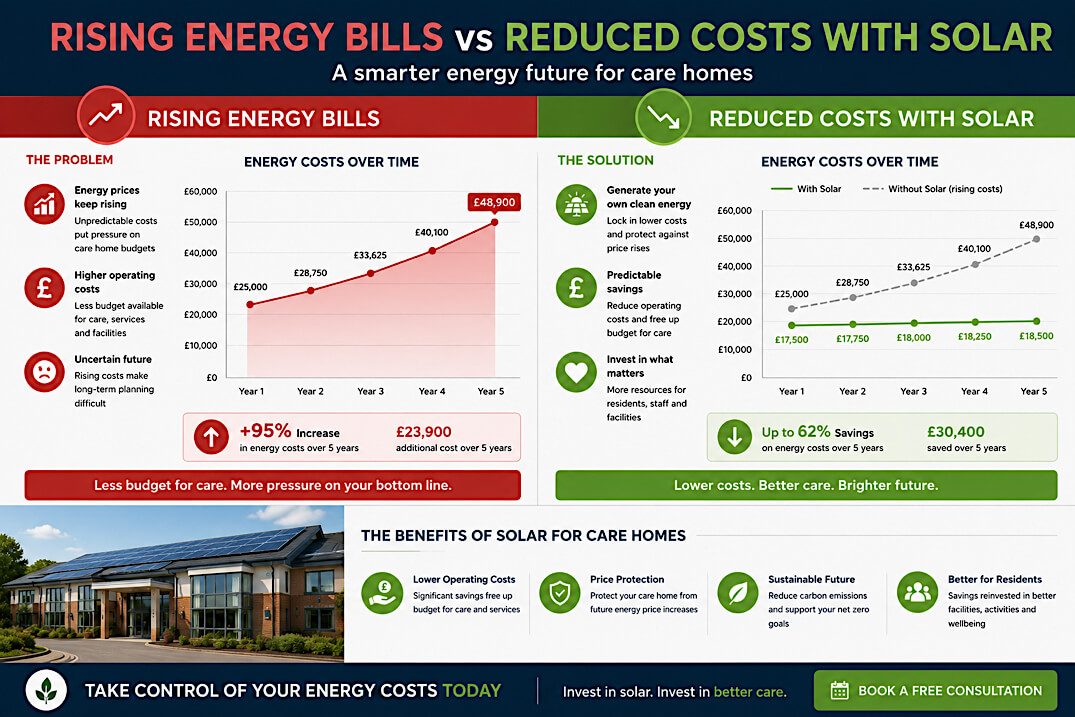
The upfront cost is the most common reason care homes delay solar — but paying cash is only one of several routes. Here is how UK homes fund a system, with the trade-offs of each laid out plainly.

1. Outright purchase (CapEx)
Buying the system outright gives the strongest long-term return. You own the asset, you keep every penny of saving, and the system adds value to the property. For homes with the reserves, this is usually the best value over the system's life — and the payback of roughly four to seven years is comfortably inside the 25-year-plus lifespan.
The tax angle: Annual Investment Allowance
Qualifying commercial solar typically attracts the Annual Investment Allowance, which lets eligible UK businesses claim 100% first-year tax relief on the cost, up to the annual cap. For a profit-making operator this materially improves the post-tax return. Tax treatment depends entirely on your circumstances, so confirm the detail with your accountant.
2. Asset finance & leasing
Asset finance spreads the cost over a fixed term while you start saving from day one. In many cases the monthly repayment is comparable to, or lower than, the energy saving the system delivers — so the investment is broadly cash-flow neutral while you build towards owning the asset outright at the end of the term.
3. Power Purchase Agreement (PPA)
A PPA means a third party funds, installs, owns and maintains the system at no upfront cost to you. You simply buy the electricity it generates at a rate set below the grid price, so you save from day one without any capital outlay or maintenance responsibility. The trade-off is a lower long-term return than ownership, because the funder takes a share. PPAs suit homes that want the savings and the green credentials without touching capital budgets — and many include an option to buy the system later.

4. Grants for charity & faith-based homes
Charity-owned, not-for-profit and faith-based care homes can often access funding that private operators cannot. Charitable trusts and foundations regularly part-fund renewable energy projects, frequently covering a meaningful share of the capital cost. These routes usually involve match-funding and an application process, and they sit alongside — not instead of — the options above. If you are a charity, it is well worth exploring before you commit capital.
Export income: the Smart Export Guarantee

On bright days your home will sometimes generate more than it can use — at weekends, for example, or in high summer. Under the Smart Export Guarantee (SEG), licensed suppliers pay you for the surplus you send back to the grid. Export rates are modest compared with the value of the electricity you use yourself, which is why we size systems for self-consumption first, but SEG turns what would otherwise be wasted generation into a small, steady income that improves the overall return.
An illustrative example

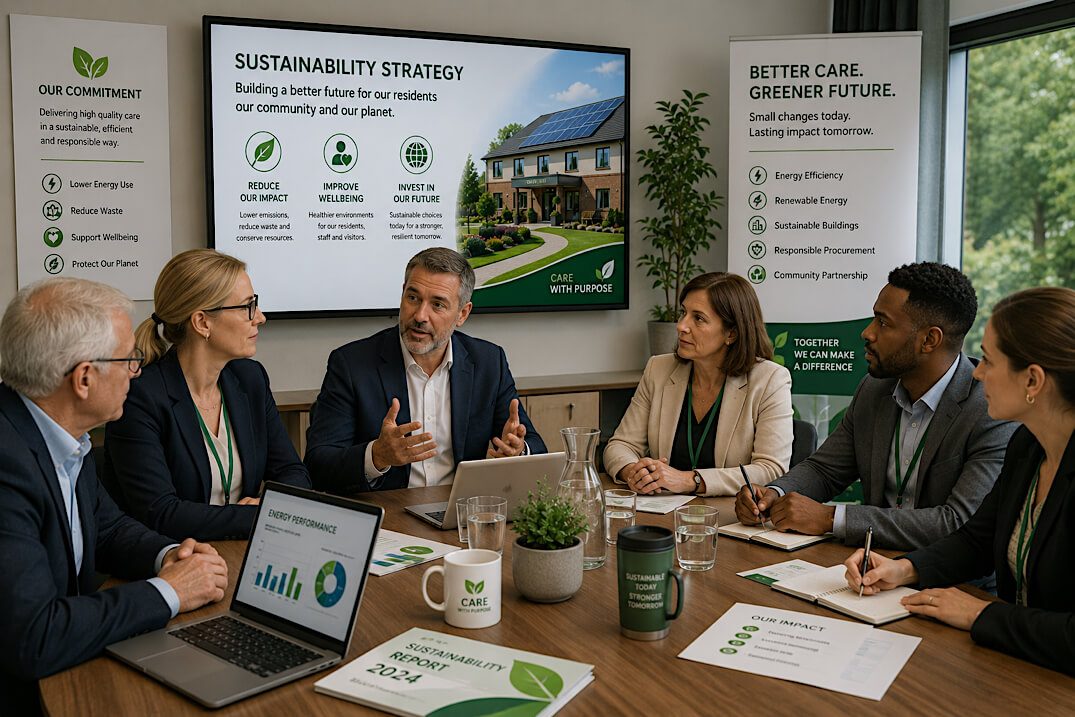
To show how the pieces fit together — and these figures are illustrative only, not a quote — picture a charity-run nursing home that installs a 65 kWp system. With round-the-clock demand, it self-consumes the large majority of what it generates, saving five figures on its annual electricity bill from year one, with a small additional SEG income on top. A successful charitable-trust grant covers a meaningful slice of the capital cost, bringing the effective payback down to just a few years. After that, the generation is essentially free for the remaining two decades of the system's life. Your own numbers will differ, which is exactly why we model them from your real consumption.
What our pricing includes

Our proposals are fully costed, with no surprises later. A typical quotation covers design and engineering, the panels, inverters, mounting and any battery, the electrical work and grid (G99) application, scaffolding and safe access, installation, commissioning, monitoring set-up and your handover documentation. We will always be clear about what is and is not included, so you can compare like with like.
Which route is right for you?
There is no single best answer; it depends on your reserves, tax position, ownership structure and appetite for capital spend. As a rough guide:
- Strong reserves, profit-making: outright purchase plus AIA usually wins on return.
- Want savings without capital spend: a PPA removes upfront cost and maintenance.
- Prefer to spread the cost and own it later: asset finance.
- Charity or faith-based: combine grant funding with one of the above.
A word on lease-held buildings
If your home operates from a leased building, there are consent and service-charge points to work through with the freeholder before installation. We have handled this many times and can guide you through what needs agreeing — it rarely stops a project, but it pays to start early.
Get the numbers for your home
We will model each route against your actual figures so you can compare lifetime cost, cash flow and ownership side by side. Book a free survey and we will include a clear funding comparison in your proposal — no pressure, no jargon.